How to Sell a Damaged House in Edmonton: What to Know

A damaged house can usually still be sold in Edmonton. That may surprise homeowners who assume they need to fix everything first, or that a damaged property is impossible to move. But the right way to sell depends on the type of damage, how severe it is, what repairs would cost, how much time you […]

A damaged house can usually still be sold in Edmonton. That may surprise homeowners who assume they need to fix

Matthew Turner

Real Estate Researcher & Writer

Sell a Damaged House Fast for Cash in Edmonton

A damaged house can usually still be sold in Edmonton. That may surprise homeowners who assume they need to fix everything first, or that a damaged property is impossible to move. But the right way to sell depends on the type of damage, how severe it is, what repairs would cost, how much time you have, and where you stand financially. Edmonton homeowners who are dealing with a damaged property generally have more than one selling route open to them: repairing before listing, listing the property as-is, or selling directly to a buyer.


This guide walks through the common types of damage, how repair decisions actually get made, what a cash buyer looks at when evaluating a damaged home, and the steps involved in selling one, so you can figure out which path fits your situation before you commit to any of them.

What Is Considered a Damaged House?

“Damaged house” covers a wide range of situations. It typically includes properties affected by:


  • Water damage from leaks, plumbing failures, or moisture buildup
  • Flood damage, including basement flooding
  • Fire or smoke damage
  • Foundation or structural problems
  • Mold, often linked to an underlying moisture issue
  • Roof damage, including leaks or missing materials
  • Electrical problems or outdated wiring
  • Plumbing issues, including frozen or burst pipes
  • Storm or weather-related damage
  • Severe neglect or hoarding-related deterioration
  • Major unfinished renovations
  • A general need for extensive repairs


The severity of these issues varies enormously. A slow roof leak and a failing foundation are both “damage,” but they carry very different repair costs, safety implications, and effects on a sale.

Damage Types Your House May Have

It helps to think about damage in categories. Where a property falls in this range shapes almost every decision that follows, including whether repairing it makes financial sense and which buyers are realistically going to be interested.


  • Cosmetic issues, like worn flooring or dated finishes, rarely affect whether a house can sell
  • Maintenance problems, like an aging furnace, are common and usually manageable
  • Major repair needs, like a full roof replacement, involve real cost and planning
  • Safety-related damage, like exposed wiring or unstable flooring, should be assessed and may need to be repaired or clearly disclosed to prospective buyers
  • Structural damage, like foundation movement, often requires professional assessment before any repair or sale decision
  • Severe deterioration, from long-term neglect or an uninhabited property, usually needs the most extensive work

Can You Sell a Damaged House in Edmonton?

In most cases, yes. Damage alone may not make a house unsellable, but it does narrow or shift your options. A house with a manageable issue, like a roof that needs replacing, can still have a relatively straightforward path to sale, particularly when the condition is clearly understood and priced accordingly.


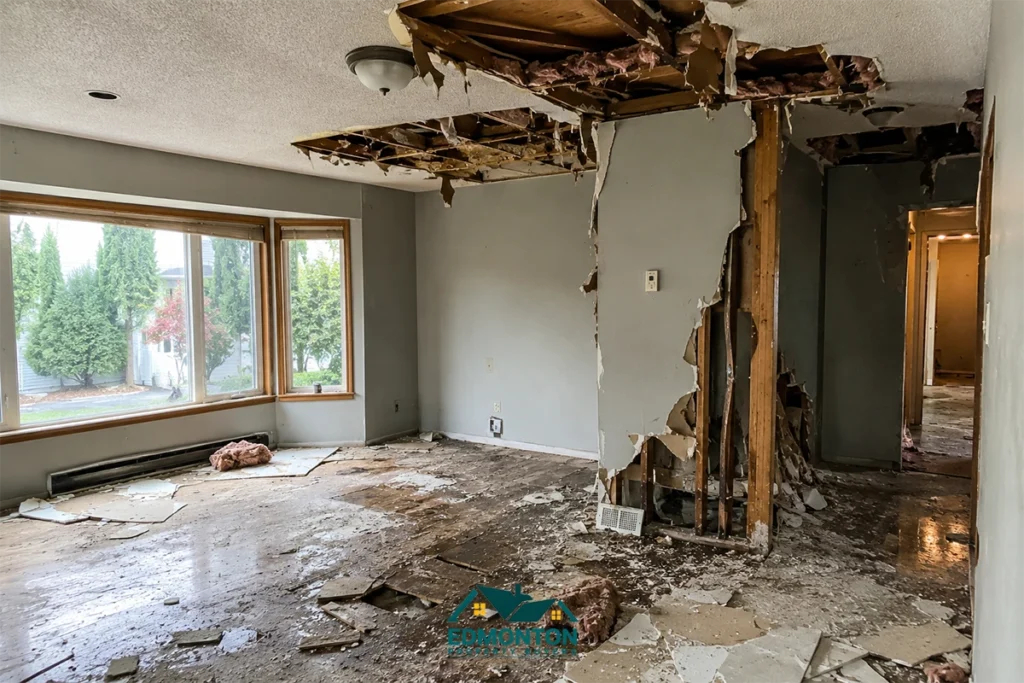
A house with more serious damage, like significant structural movement, will likely have a smaller pool of interested buyers and may need a different selling approach. Both can still sell. The difference is in how much preparation is involved and who is likely to buy.


Whether a specific property can sell, and how easily, depends on several factors:


  • The type of damage and how severe it is
  • The property’s overall condition beyond the damage itself
  • Location and current market conditions
  • The ownership and title situation
  • What kind of buyer you’re targeting (traditional, investor, or direct buyer)
  • Whether financing is likely to be a factor for potential buyers
  • Any applicable disclosure requirements
  • How the property compares to similar homes in the area


This is also where financing becomes relevant. Traditional buyers often need mortgage approval, and lenders can be cautious about properties with unresolved safety or structural issues. That’s one reason homeowners with more serious damage often look at as-is sales or direct buyers, not because the house can’t sell traditionally, but because it narrows the realistic buyer pool.

What Types of Damaged Houses Can You Sell?

Edmonton homes end up on the market with all kinds of damage, and most of them can still be sold. The sections below cover the most common types, what typically matters about each one, and what to consider before deciding how to sell.

Selling a House With Water Damage

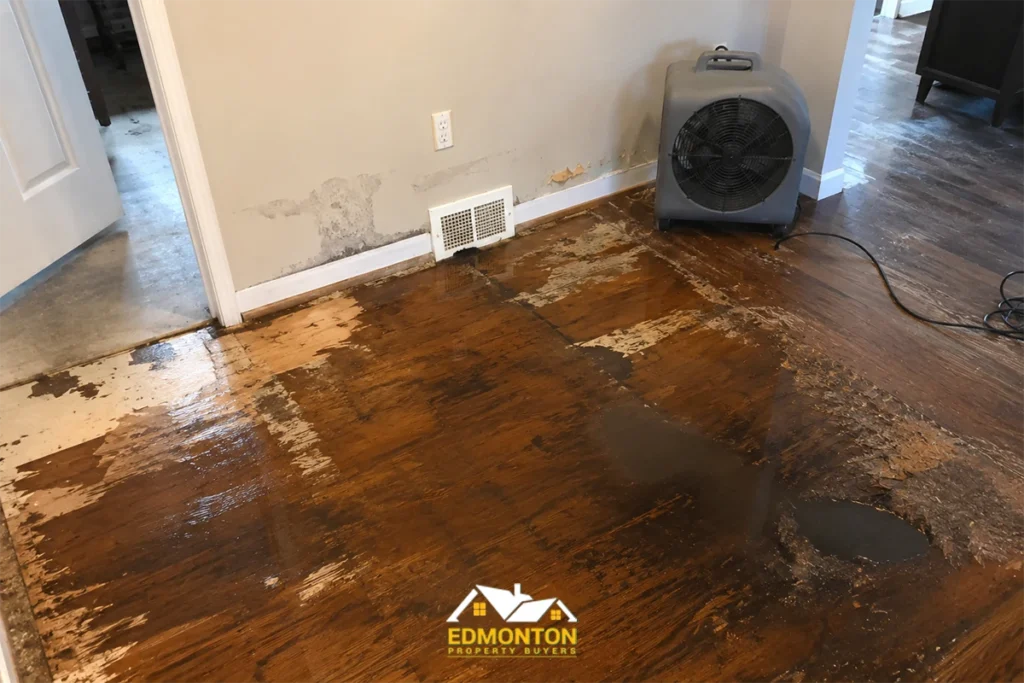
Water damage is a recurring issue for Edmonton homeowners, particularly in situations involving drainage, basement flooding, leaks, or moisture. It usually comes from a plumbing leak, an appliance failure, a roof leak that’s made its way inside, or general moisture buildup in a basement.


Some water damage is easy to spot, like a stained ceiling or warped flooring. Other cases are less obvious. Moisture trapped behind walls or under flooring can go unnoticed for a while, which is part of why water damage is often more extensive than it first appears once someone starts looking closely.


Basements are a frequent problem area, particularly where grading, drainage, or aging plumbing is involved. Left unaddressed, moisture can lead to secondary issues like mold, so the timeline between when water damage happened and when it was dealt with matters.


Repair costs for water damage range widely depending on how far it spread and whether it’s affected structural components like subfloors or framing. That range is exactly why some homeowners choose to make repairs before selling, while others decide it makes more sense to sell the property as-is and let the next owner handle it. Both are reasonable paths, and the right one usually comes down to the extent of the damage and what repairs would realistically cost.
 

a House With Water Damage

Selling a Flood-Damaged House

Flooding is different from ordinary water damage in scale. Where a leak might affect one area, flooding, whether from overland water, sewer backup, or a major plumbing failure, tends to affect larger sections of a home at once, most often the basement. Standing water for even a short period can affect flooring, drywall, insulation, and personal belongings, and the cleanup and drying process should begin as soon as it is safe to do so.


The extent of flood damage typically comes down to a few factors:


  • How much water was involved
  • How long it sat before being addressed
  • What materials it came into contact with


If the flooding was covered by an insurance claim, that process is usually running alongside the decision about how to sell. Documentation from that claim, including photos, assessments, and repair estimates, can also be useful when a homeowner is deciding between repairing the property or selling it in its current condition.


As with other types of water-related damage, some homeowners choose to repair a flood-damaged property before listing it, while others prefer to sell as-is rather than manage the remediation and repair process themselves. The right choice depends on the extent of the damage, the homeowner’s timeline, and what repairs would cost.

Selling a Fire-Damaged House

Fire damage rarely stays contained to a single source. Even a small fire can leave behind smoke and soot that spread through the rest of the house, and the water used to put the fire out often causes damage of its own. It’s common for a fire-damaged property to be dealing with all three at once: fire, smoke, and water.


Smoke and soot are often the more persistent problem. Odor can linger in drywall, insulation, and flooring long after visible damage is cleaned up, and it typically takes professional remediation, not just cleaning, to resolve fully. Fire can also compromise structural elements depending on how far it spread and how long it burned, which is something a professional assessment can clarify before any repair or sale decision is made.


Insurance is almost always part of the picture with a fire damaged house in Edmonton. Between the claim process, documentation, and any temporary living arrangements, homeowners are often managing a lot at once, and deciding how to sell the property is only one piece of it.


When a fire-damaged property goes through an insurance claim, the homeowner may have access to professional assessments and repair estimates earlier in the process, which can make the repair-versus-sell decision easier to evaluate.

Do You Need to Repair a Damaged House Before Selling?

Not usually. Many homeowners assume repairs are a requirement before a house can go on the market, but in most cases, that’s an expectation, not a rule. That assumption often comes from how traditional listings tend to work. Agents commonly recommend repairs to attract more buyers or support a higher asking price, and buyers browsing a traditional listing often expect a property to be in reasonably move-in-ready condition.


There are situations where repairs matter more directly. Safety issues, like exposed wiring or an unstable structure, may require professional assessment and may need to be addressed before the property can be safely occupied or certain work can proceed, simply because they pose a risk to anyone in the home. Lenders may impose additional conditions when a financed property has significant unresolved safety, structural, or other condition concerns, which can make a traditional transaction more complicated.


Outside of those cases, whether repairing makes sense for you comes down to a handful of practical factors:


  • Estimated repair cost versus the value it’s likely to add
  • Time available before you need to sell
  • Whether the damage affects safety
  • The buyer pool you’re targeting
  • Any ongoing insurance claim
  • Your own financial position


Weighed against those factors, repairing before selling is a choice, not something the sale itself demands, and it’s one worth comparing directly against selling the property as-is or to a direct buyer.

Repair VS Sell As-Is: Should You Repair the House or Sell It As-Is?

Neither path is automatically better. Repairing can widen your buyer pool and support a higher price, but it also means funding the work upfront and managing contractors on a timeline you don’t fully control. Selling as-is skips that process, but the price will generally reflect the property’s current condition, along with the buyer’s expected repair costs and risk.

Consideration Repair Before Selling Sell As-Is
Upfront cost Higher Lower
Timeline Usually longer Often shorter
Contractor coordination Required Limited or none
Property condition Improved before sale Sold in current condition
Buyer pool Potentially broader Potentially narrower
Financial risk Possible cost overruns Offer reflects the property's condition

Where you land usually comes down to whether the numbers make sense: the gap between cost of repairs before selling and what they’d realistically add to the sale price, set against how much cash and time you have available to spend getting there.

How Does Damage Affect the Value of a House?

Damage lowers value, but by how much depends on the type of damage, its severity, the cost to repair it, and how the rest of the property compares to similar homes nearby. Professional appraisal standards in Canada treat the effect of damage or defects on value as something that has to be based on market data, not a general assumption.


A few factors carry the most weight in that evaluation:


  • Location and current market conditions
  • The property’s size, age, and overall condition
  • Type and severity of the damage
  • Estimated repair or remediation cost
  • Recent comparable sales in the area
  • Buyer demand for the property type
  • Potential value after repairs are completed


A property with minor, easily quantified damage, like a roof that needs replacing, tends to lose less value than one with damage that’s harder to price, like undiagnosed structural movement. Uncertainty can have an additional effect on value because buyers and lenders may be more cautious about problems they can’t fully assess.


That’s also why a house value after water damage or a house value after fire damage can vary significantly between two seemingly similar properties. The extent of the damage, how it was documented, and whether the cause has actually been resolved all factor into what a buyer is willing to offer.
 

Sell a Damaged House

How Do Cash Buyers Evaluate a Damaged House?

Cash buyers evaluate a damaged property differently than a traditional buyer would, since they’re pricing the home as it is rather than expecting the seller to prepare it for a typical listing. That process comes down to two things: what the buyer actually looks at, and how those observations turn into an offer.

What a Cash Buyer Looks At

A cash buyer’s evaluation usually starts with a direct look at the property itself: what condition it’s actually in, what the damage involves, and what it would take to bring it back to a sellable state. From there, several other pieces come into play, including the property’s location and neighborhood, its type and size, recent comparable sales in the area, current market conditions, and what the home could realistically sell for once repaired.


Holding costs and the buyer’s own transaction costs factor in too, and generally, the more uncertainty there is about a property’s condition, the more caution shows up in the offer.

How Those Factors Become a Number

There’s no single formula every cash buyer uses, but most work from a similar general logic: start with what the property would likely be worth in good condition, subtract the estimated cost of repairs, then account for holding costs, transaction costs, and risk. What’s left is roughly the offer.


Two buyers can walk through the same damaged house and land on different numbers, because they may estimate repair costs, resale potential, or risk differently, even while using a similar general approach. That’s part of why it’s worth asking a buyer how they arrived at their number rather than treating the offer as a fixed fact.


At Edmonton Property Buyers, we walk through the property’s condition directly with the homeowner and typically respond within about 3 hours during business hours when you contact us, with a cash offer for damaged houses usually following within 48 hours of that evaluation.

How Fast Can You Sell a Damaged House in Edmonton?

Homeowners looking for a quick sale for a damaged house usually find that timeline depends almost entirely on which route they take, not on the damage itself. Repairing before listing is generally the slowest path, since it adds the time needed for contractors, materials, and the repair work itself before the home ever goes up for sale. Listing as-is skips that step, but a traditional sale still runs on financing timelines, showings, and negotiation. A direct sale is typically the fastest way to sell a damaged house fast in Edmonton, since there’s no repair work, no staging, and no waiting on a buyer’s mortgage approval.

Selling Route Typical Timeline
Repair, then sell traditionally Weeks to months for repairs, plus typical market time to sell
List the property as-is Can list quickly, but still subject to typical market and financing timelines
Sell directly to a cash buyer Offer typically within days; closing timeline varies by buyer

At Edmonton Property Buyers, we typically respond within about 3 hours during business hours and can usually provide a fast cash offer for a damaged house within 48 hours of evaluating the property. From there, closing timelines vary by situation. Our average close is around 14 days, though the right timeline for a given property can range anywhere up to about 120 days depending on what works for the homeowner.

Frequently Asked Questions

In most cases, yes. Saleability depends on the type and severity of the damage, the property's overall condition, and which buyer type you're targeting. Severe or unresolved safety issues can narrow your options, particularly with traditional financing. If you're unsure whether your specific situation qualifies, a direct evaluation is the fastest way to find out.
Yes, through an as-is listing or a direct sale to a cash buyer. Repairs generally aren't legally required to sell, though safety issues may need addressing regardless, and some traditional buyers' lenders won't finance a property with certain unresolved problems.
There's no fixed percentage, value impact depends on the type of damage, its severity, repair cost, and how the property compares to similar homes nearby. Uncertain or hard-to-assess damage, like undiagnosed structural issues, tends to affect value more than clearly defined, easily priced damage. A buyer evaluating your specific property is the only way to get an accurate number.
Yes. Water damage is a common issue Edmonton homeowners deal with before selling, and it rarely prevents a sale on its own. The extent of the damage, and whether it's spread beyond what's visible, affects which selling route makes the most sense. A professional assessment can clarify the full scope before you decide.
Yes. Flood damage often affects a larger area than typical water damage, most commonly the basement, but it's still a sellable situation. If there's an active insurance claim, that documentation can be useful context regardless of how you choose to sell. Getting the property evaluated in its current state is the next practical step.
Yes. Fire damage is usually assessed formally as part of an insurance claim, which often gives homeowners a clearer repair cost picture earlier than with less visible damage. Whether repairing or selling as-is makes more sense depends on that cost picture and your own timeline. Reviewing your claim documentation is a useful starting point before deciding.
Often, yes, though it depends on the specific property and buyer. Cash buyers generally evaluate homes in their current condition rather than requiring repairs first, but not every property fits every buyer's criteria. The only way to know for certain is to have the specific property evaluated.
There's no single formula every buyer uses, but the general logic typically starts with the property's likely value in good condition, then subtracts estimated repair costs, holding costs, and risk. Two buyers can reach different numbers for the same property depending on how they weigh those factors.
Useful things to have include the property address, photos of the damage, any repair estimates, insurance claim information, and mortgage details, though none of this needs to be fully assembled before reaching out. Missing several items isn't a barrier to starting the process. Most buyers can begin the conversation with whatever you already have.
It depends heavily on the route. Repairing first is typically the slowest option, as-is listings run on standard market and financing timelines, and direct cash sales are generally the fastest since there's no repair work or financing wait involved. Closing timelines still vary by buyer and by property.

Conclusion

A damaged house isn’t a dead end. What changes is the selling process: understanding what you’re dealing with, knowing whether repairs make sense, and comparing your real options before committing to one.


There’s no single right answer for every property. Repairing and listing traditionally can produce a stronger sale price for homeowners with the time and funds to invest. Selling as-is skips that process for those who’d rather not take it on. And a direct cash sale can work well if you want to sell a damaged house fast in Edmonton without repairs, staging, or financing delays. The right choice comes down to your property’s condition, your timeline, and what actually matters most to you: price, speed, or simplicity.


If a direct sale is something you’re considering, Edmonton Property Buyers can evaluate your property based on its current condition and let you know whether it fits our buying criteria; no repairs, no staging, no obligation to accept.

  1. Real Estate Council of Alberta (RECA), Real Estate Act Rules – https://www.reca.ca/rules/
  2. RECA (Consumer Hub), “Property Considerations: Material Latent Defects” – https://www.recaprotects.ca/property-considerations/#Material-Latent-Defects
  3. Appraisal Institute of Canada, “Real Estate Damages: The Appraisal of Properties Impacted by Detrimental Conditions” – https://www.aicanada.ca/article/real-estate-damages-the-appraisal-of-properties-impacted-by-detrimental-conditions/
  4. Insurance Bureau of Canada, “How to File a Home Insurance Claim” – https://www.ibc.ca/insurance-basics/home/how-to-file-a-home-insurance-claim
Table of Contents

Get My Cash Offer

Your information is kept private and used only to prepare your offer.

Matthew Turner

Matthew has written for several websites in the property and real estate industry, covering topics such as home selling, difficult property situations, and Edmonton and Alberta real estate. His goal is to turn complex property topics into straightforward, useful information that helps homeowners better understand their options.

Matthew Turner is a real estate researcher and writer based in Edmonton, Alberta, with 5+ years of experience writing and researching real estate and home-selling topics for websites in the industry. His work focuses on Edmonton and Alberta property-related subjects, helping homeowners understand their options and make more informed decisions.
Matthew combines industry research with practical writing to turn complex property topics into clear, useful information for homeowners and sellers.

Luxury Edmonton home background
Ready to Get Your Cash Offer?

Tell Us About Your Property

We will respond within 3 hours during business hours with next steps toward a fair, no-obligation cash offer.

  • No cost. No obligation.
  • We will give you an honest answer.
  • Response within 3 hours.

Phone: +1 (587) 855-5427

Email: [email protected]

Hours: Mon–Fri 8am–6pm, Sat–Sun 9am–5pm

Get My Cash Offer

Your information is kept private and used only to prepare your offer.

Keep Reading

Our Recent Posts

Real guidance on selling fast, selling as-is, and what a cash offer actually looks like written by the same local team that makes the offers.